What They Thought They Needed
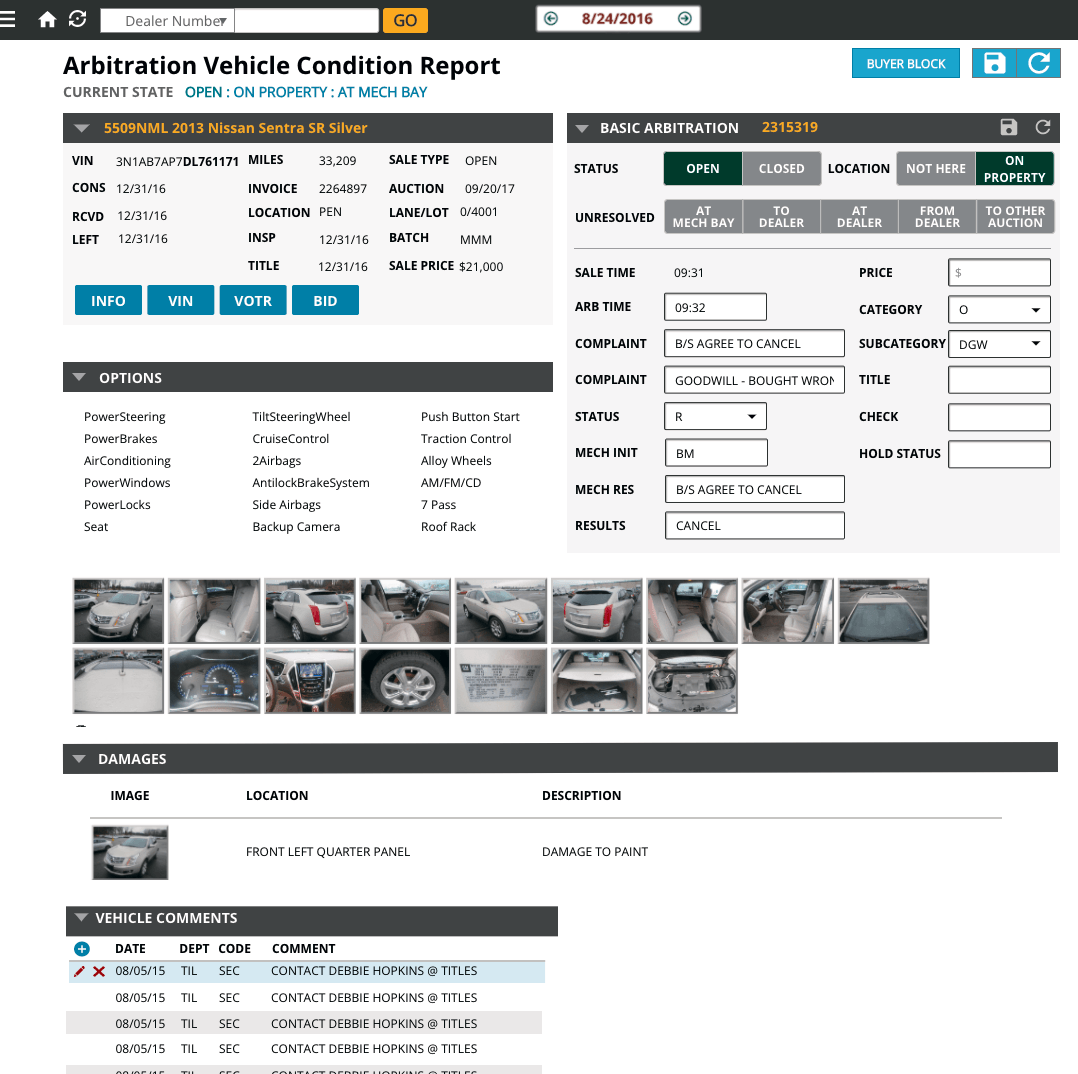
A visual refresh. Southern Auto Auction had been running weekly multi-million dollar auctions on 30-year-old software that looked like MS-DOS. It worked, barely, but required constant patches, workarounds, and institutional knowledge locked inside people’s heads.
They wanted it to look modern, with a cleaner interface and less clunky interaction.

The Problem
The problem was not the interface. It was that the entire business system was undocumented, siloed, and held together by tribal knowledge.
Departments did not talk to each other. Analog processes ran parallel to digital ones. Context-switching was constant. Nobody could see the whole picture because there was not one, just fragments scattered across desks, spreadsheets, and memory.
Over two years, I worked with auctioneers, lot managers, and back-office staff to map what was really happening. What emerged was not a design problem. It was a systems problem disguised as a UI problem.

What Changed
We redesigned the entire business system from the ground up. Not just screens, but workflows, information architecture, and the relationship between digital and analog processes. We eliminated context-switching bottlenecks and made the invisible visible.
The client team stayed engaged for nearly two years. The work was valued at $2M. Then COVID-19 hit, and the project stopped.
It did not ship. But the thinking behind it, how to untangle legacy systems, align siloed teams, and build trust through collaboration, has informed every complex project I’ve led since.